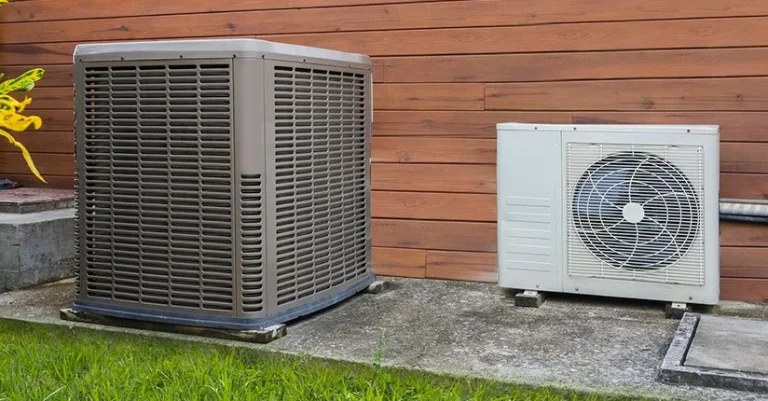
Heat pumps are becoming one of the most popular heating upgrades for homes across Ireland. With rising energy costs, strong government incentives, and growing environmental awareness, many homeowners are considering switching from traditional oil or gas boilers to modern heat pump systems.
However, one of the biggest concerns homeowners have is whether they must complete a full deep retrofit before installing a heat pump.
For many years, the common belief was that heat pumps only worked in highly insulated homes that had undergone extensive upgrades such as wall insulation, new windows, and ventilation improvements.
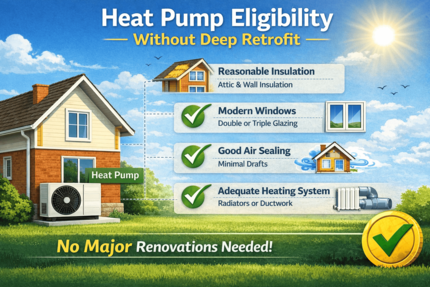
In 2026, the situation is more flexible. While insulation and energy efficiency remain important, many homes may qualify for a heat pump without completing a full deep retrofit if they meet certain heat-loss requirements.
This guide explains how eligibility works, which homes qualify, and what upgrades may still be required before installing a heat pump.
What Is a Deep Retrofit?
A deep retrofit refers to a comprehensive upgrade of a home’s energy performance.
These projects usually include multiple improvements such as:
- External or internal wall insulation
- Attic insulation upgrades
- Replacement of windows and doors
- Improved ventilation systems
- Heating system upgrades
- Air-tightness improvements
The goal of a deep retrofit is to dramatically reduce heat loss and improve a home’s Building Energy Rating (BER).
While deep retrofits provide significant energy savings, they can also be expensive and disruptive, which is why many homeowners want to know if they are strictly necessary for heat pump installation.
Understanding Heat Loss in Irish Homes
Heat pumps work differently from traditional boilers.
Traditional boilers generate high-temperature heat to warm radiators quickly. Heat pumps, on the other hand, operate at lower temperatures but run for longer periods, providing steady and efficient heating.
Because of this difference, homes must be able to retain heat efficiently.
If a property loses heat too quickly, the heat pump will need to work harder to maintain comfortable temperatures, which can reduce efficiency and increase electricity consumption.
For this reason, the key factor used to determine eligibility is the Heat Loss Indicator (HLI).
What Is the Heat Loss Indicator (HLI)?
The Heat Loss Indicator (HLI) measures how much heat escapes from a building relative to its floor area.
It is expressed in watts per square metre per kelvin (W/m²K).
Lower HLI values indicate better insulation and less heat loss.
Typical benchmarks include:
| HLI Value | Meaning |
|---|---|
| Below 2.0 | Ideal for heat pump installation |
| 2.0 – 2.3 | May still qualify with minor upgrades |
| Above 2.3 | Insulation improvements usually required |
Homes that meet the recommended HLI threshold may install a heat pump without completing a full deep retrofit.
Homes Built After 2007
Homes built after 2007 are generally more energy efficient because of improved building regulations.
These homes often already have:
- Modern insulation standards
- Double or triple-glazed windows
- Improved air-tightness
- More efficient heating systems
Because of these features, many post-2007 homes already meet the heat-loss requirements needed for heat pump installation.
In many cases, homeowners only need to complete a simple self-declaration confirming the property meets heat-loss standards before proceeding with installation.
This makes the process much simpler compared to older properties.
Homes Built Before 2007
Older homes can still qualify for heat pumps, but they usually require a technical assessment to determine whether they meet the heat-loss criteria.
During this assessment, specialists will evaluate:
- Current insulation levels
- Window performance
- Heating system efficiency
- The overall heat demand of the house
If the heat-loss indicator falls within the acceptable range, the homeowner may install a heat pump without completing a full deep retrofit.
However, some targeted improvements may still be recommended.
Read more: How to Install a Heat Pump (Step-by-Step Guide)
Upgrades That May Be Needed Without a Full Retrofit
Even if a deep retrofit is not required, certain improvements may still help ensure the heat pump operates efficiently.
Common upgrades include:
Radiator Replacement
Heat pumps operate at lower temperatures, so some homes may need larger radiators to distribute heat effectively.
Heating Controls
Modern heating controls allow better temperature regulation and improved system efficiency.
Attic Insulation
Upgrading attic insulation is often one of the easiest and most affordable ways to reduce heat loss.
Pipe Insulation
Insulating heating pipes helps minimise heat loss within the heating system.
These smaller upgrades are usually much cheaper and less disruptive than a full retrofit project.
Benefits of Installing a Heat Pump Without Deep Retrofit
Many homeowners are choosing this approach because it offers several advantages.
Lower Upfront Costs
A deep retrofit can cost tens of thousands of euros. Installing a heat pump without extensive upgrades significantly reduces the initial investment.
Faster Installation
Heat pump installations typically take only a few days once eligibility requirements are met.
Reduced Energy Bills
Heat pumps are highly efficient and can produce several units of heat for every unit of electricity used.
Lower Carbon Emissions
Switching from fossil fuels to renewable heating significantly reduces a household’s carbon footprint.
Heat Pump Grants in 2026
Government incentives have made heat pump installation more affordable for Irish homeowners.
Grants in 2026 can cover a significant portion of installation costs and may also support certain heating system upgrades.
These incentives are designed to encourage homeowners to replace fossil-fuel heating systems with more sustainable alternatives.
Financial support may include funding for:
- Heat pump systems
- Heating distribution upgrades
- Technical assessments
These incentives help accelerate the transition to low-carbon home heating across Ireland.
When a Deep Retrofit Is Still Necessary
Although many homes can install heat pumps without full retrofits, some properties may still require significant upgrades.
Deep retrofits may be necessary when:
- The building has very poor insulation
- The heat loss indicator is significantly above recommended levels
- Windows and doors allow excessive heat loss
- The heating distribution system is incompatible with low-temperature heating
In these situations, improving insulation may be essential before installing a heat pump.
Tips for Homeowners Considering a Heat Pump
If you are planning to install a heat pump, consider the following steps.
Check Your BER Rating
Your Building Energy Rating provides insight into the energy performance of your home.
Arrange a Heat Pump Assessment
An installer or energy specialist can calculate your heat loss indicator.
Improve Insulation Where Possible
Even small improvements can increase efficiency and reduce long-term energy costs.
Compare Multiple Installers
Getting quotes from several installers helps ensure you receive the best system for your property.
The Future of Heat Pumps in Ireland
Heat pumps are expected to play a major role in Ireland’s transition toward cleaner energy.
Government climate targets aim to dramatically increase the number of homes using renewable heating systems over the coming years.
As technology improves and installation costs continue to fall, heat pumps will likely become the standard heating solution for both new and existing homes.
Conclusion
Installing a heat pump in Ireland no longer automatically requires a full deep retrofit. Many homes—particularly those built after 2007—may already meet the heat-loss requirements needed for efficient operation.
Even older homes can sometimes qualify with only minor improvements such as radiator upgrades or additional insulation.
The key factor determining eligibility is the Heat Loss Indicator, which measures how well a home retains heat.
By understanding these requirements and planning upgrades carefully, homeowners can transition to heat pump technology without the cost and disruption of a full retrofit project.