
What Makes a Great Starter Metal Detector?
Choosing the best starter metal detector is one of the most important decisions you’ll make as a new detectorist. Pick the right machine, and you’ll be out in your yard finding coins within an hour of unboxing. Pick the wrong one, and you’ll spend your first hunts digging up rusted nails and bottle caps while your enthusiasm slowly drains.
The good news? The beginner metal detector market in 2026 is better than it has ever been. Machines that would have cost $600–$800 five years ago now sell for under $300 with features that genuinely rival mid-range detectors of the past decade. But with so many options on the market, the noise can be overwhelming.
We spent weeks testing machines across parks, beaches, farmland, and urban areas. We dug hundreds of targets, compared target IDs, tested waterproofing claims, and measured true usability for someone picking up a metal detector for the very first time. This guide is the result of all that work a no-nonsense resource to help you find your first treasure fast.
“The best starter metal detector isn’t the most powerful one it’s the one you’ll actually learn on, enjoy using, and grow with as your skills develop.”
What We Looked for in a Beginner Metal Detector
When evaluating each machine for this guide, we focused on the criteria that matter most to someone brand new to the hobby:
- Ease of setup Can you have it running within 15 minutes of opening the box?
- Intuitive controls Simple buttons, clear screen, no jargon-heavy menus
- Target ID accuracy Does it reliably distinguish coins from trash?
- Forgiving learning curve Does it help you learn rather than frustrate you?
- Build quality for the price Will it survive a full season of regular use?
- Room to grow Can you still get value from it as your skills improve?
- Weight and ergonomics Is it comfortable to swing for 2–3 hours?
- Value for money Does it punch above its price point?
Our Top 7 Best Starter Metal Detectors (2026)
1. Garrett ACE 400 Best Overall Starter (~$270)
2. Nokta Simplex Lite Best Waterproof Starter (~$180)
3. Minelab X-Terra Pro Best “Grow Into It” Pick (~$400)
4. Bounty Hunter TK4 Tracker IV Best Budget Pick (~$70)
5. Nokta Simplex Ultra Best for Beach Beginners (~$320)
6. Minelab Vanquish 540 Best Mid-Range Value (~$350)
7. Garrett ACE 300 Best Classic First Detector (~$200)
Full In-Depth Reviews
#1 Garrett ACE 400: Best Overall Starter Metal Detector
Price: ~$270 | Frequency: 10 kHz | Weight: 2.8 lbs | Waterproof: Coil only | Target ID: 0–99 Digital | Search Modes: 5 | Coil: 8.5×11″ DD
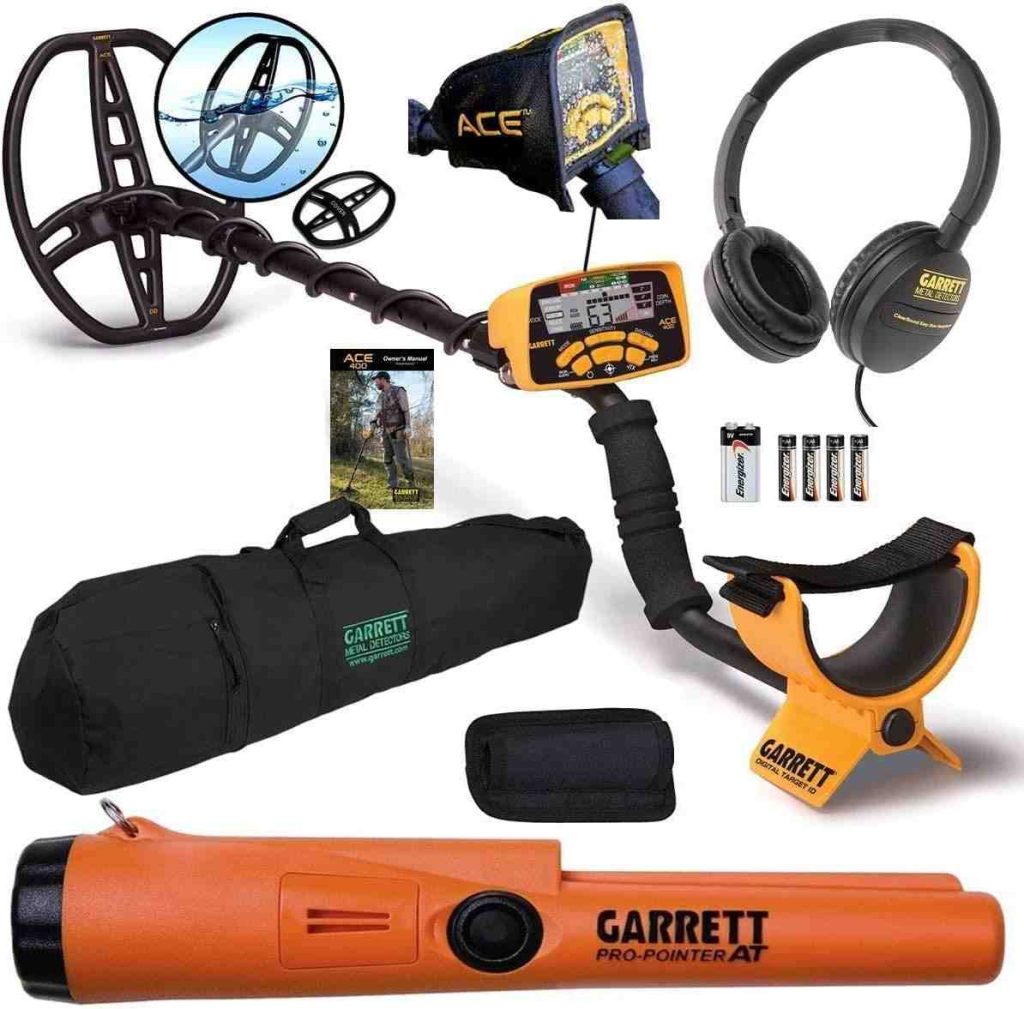
The Garrett ACE 400 has been a beginner’s best friend for years, and in 2026 it remains one of the smartest first purchases you can make. Operating at 10 kHz, it delivers excellent sensitivity to small targets like coins and jewelry notably better than the lower-frequency ACE 300 while staying completely accessible to a total newcomer.
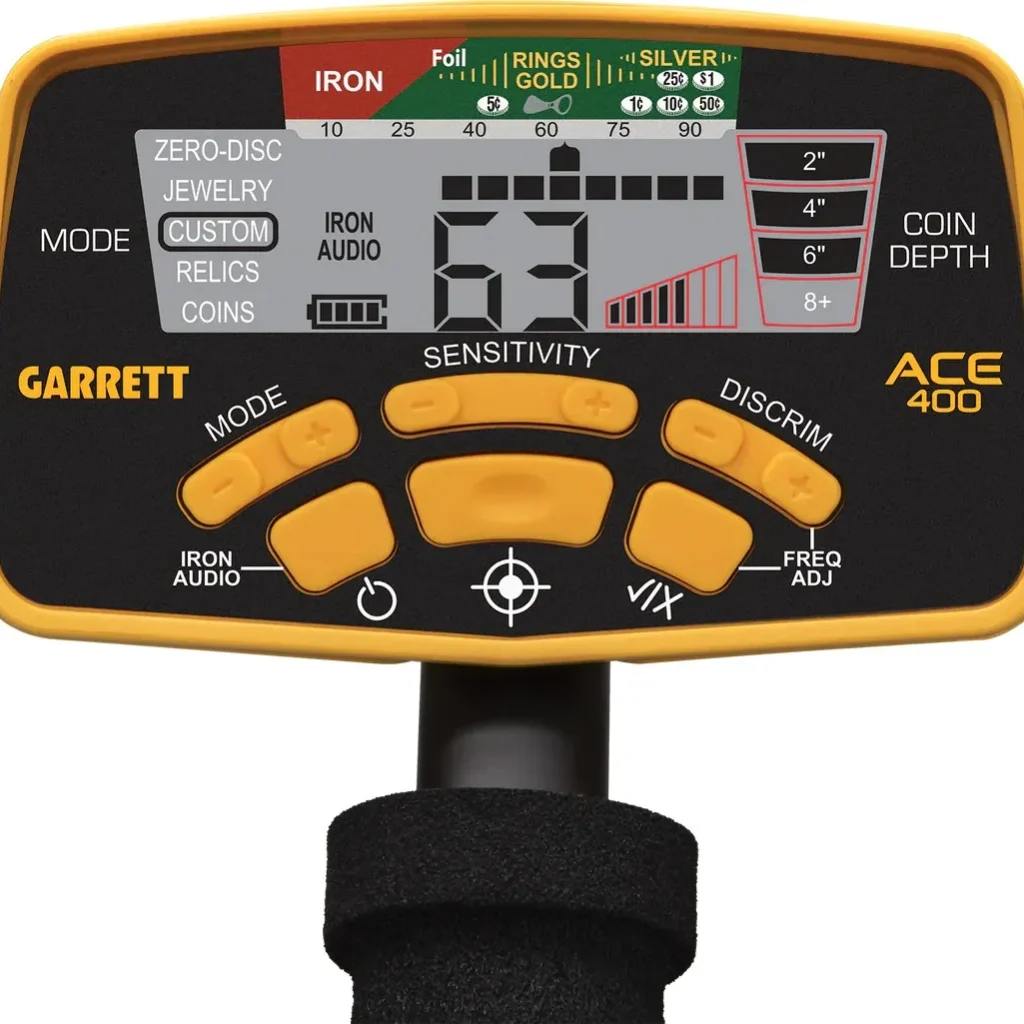
What sets the ACE 400 apart is its Iron Audio feature. This lets you actually hear masked iron targets rather than having them silently rejected. For a beginner, this is gold literally. It trains your ear to identify what’s in the ground before you dig, dramatically reducing frustrating junk finds while building crucial instincts faster than any other entry-level detector can.
The 0–99 Digital Target ID scale is accurate and reads quickly. Low numbers indicate iron or foil; high numbers (85–95) indicate silver coins; mid-range numbers reveal copper pennies and pull tabs. Within a few hunts, you’ll start to “read” these numbers intuitively.
The 8.5×11″ DD coil is a significant advantage over the smaller concentric coils on budget detectors. DD coils provide better separation between closely-spaced targets, better performance in mineralized soil, and more ground coverage per swing. You’ll cover a park faster and miss fewer targets in trashy areas.
Field testing across a suburban park, a 19th-century farmstead, and a gravel beach confirmed that the ACE 400 finds targets at respectable depths for its class 8–10 inches for large coins in good soil and gives consistent, repeatable target IDs that build your confidence hunt after hunt.
Pros: Easy to learn, Iron Audio discrimination, USA-made build quality, excellent DD coil Cons: Control box is not waterproof, single frequency only
Who is it best for? Anyone serious about the hobby from day one who wants a machine they won’t outgrow too quickly. The Garrett ACE 400 is the safe, proven, can’t-go-wrong choice for most beginners.
Pro Tip: Pair the ACE 400 with a Garrett Pro-Pointer AT pinpointer for about $140 more. The combination will cut your recovery time in half and protect your finds by letting you locate exact target position before digging.
#2 Nokta Simplex Lite: Best Waterproof Starter Metal Detector
Price: ~$180 | Frequency: 12 kHz | Weight: 2.9 lbs | Waterproof: IP65 Full | Battery: 12 hours rechargeable | Search Modes: 4 | Coil: 9.5″ DD
At around $180, the Nokta Simplex Lite is arguably the most impressive value proposition in the entire beginner metal detector market. It is fully waterproof (IP65 rated), sports a 12-hour rechargeable battery, weighs under 3 pounds, and is genuinely one of the simplest detectors to operate we’ve ever tested.
The four preset search modes All Metal, Field, Park, and Beach remove virtually all decision-making for new users. Power it on, select your terrain, and start swinging. The bright backlit display reads clearly even in direct sunlight, and the audio tones are distinct enough to quickly train your ear to the difference between iron junk and good targets.
The IP65 waterproof rating means you can hunt in heavy rain, wade into shallow streams, and rinse the whole machine off under a tap. No other detector at this price comes close to this level of all-weather readiness. For beach hunting, it handles wet sand and saltwater surf zones confidently.
Our one caveat: the Simplex Lite is a single-frequency detector, which means it can struggle in heavily mineralized soil. For inland parks, farmland, and freshwater areas, though, this limitation will never bother a beginner.
Pros: IP65 waterproof, 12-hour rechargeable battery, incredibly simple to use, lightweight Cons: Single frequency, simpler target ID compared to ACE 400
Who is it best for? Budget-conscious beginners who want to hunt near water, parents buying a first detector for a teenager, or anyone who wants maximum simplicity without sacrificing real-world performance.
#3 Minelab X-Terra Pro: Best “Grow Into It” Detector
Price: ~$400 | Technology: Multi-Frequency | Weight: 2.65 lbs | Waterproof: 16 ft (5 meters) | Battery: 15 hours rechargeable | Search Modes: 6 | Ground Balance: Auto + Manual
If you’re the type of person who knows you’ll be passionate about metal detecting long-term, the Minelab X-Terra Pro is the single best first detector you can buy. Yes, it costs more upfront around $400 but it packs technology that typically lives in $700+ machines, and it will stay relevant for years as your skills grow.
The headline feature is multi-frequency operation. Unlike single-frequency detectors, multi-frequency machines send multiple electromagnetic frequencies into the ground simultaneously. The result? Better target identification accuracy, superior performance in mineralized and saltwater environments, and the ability to detect a wider range of metal targets at greater depths.
It is also fully waterproof to 16 feet (5 meters) meaning you can take it beach detecting, wade streams, or even shallow dive with it. The 15-hour rechargeable battery (via USB-C) is exceptional and means you’ll never cut a hunt short.
The user interface starts in simple beginner-friendly modes and reveals more advanced settings as you’re ready for them. It’s one of the only detectors that genuinely grows with you rather than becoming obsolete.
Pros: Multi-frequency technology, fully waterproof to 16 feet, 15-hour battery, beginner to expert scalability Cons: Pricier upfront, slightly more to learn than basic single-frequency machines
Who is it best for? Anyone willing to invest a bit more upfront to avoid having to buy a second detector in 12 months. The X-Terra Pro is the last “beginner” machine you’ll ever need.
#4 Bounty Hunter TK4 Tracker IV: Best Budget Metal Detector for Beginners
Price: ~$70 | Frequency: 6.7 kHz | Weight: 2.5 lbs | Waterproof: Coil only | Modes: 3 | Controls: Analog | Power: 2× 9V batteries
Not everyone wants to spend $200–$400 on a new hobby they haven’t tried yet. That’s completely reasonable and the Bounty Hunter TK4 Tracker IV exists for exactly this situation. At around $70, it is the most affordable functional metal detector on the market from a reputable manufacturer.
It has three detection modes (All Metal, Discrimination, and Tone), an analog knob interface that anyone can figure out in minutes, and an 8-inch waterproof search coil that works in light rain and shallow water. You will find coins with this machine. You will have fun with this machine.
We want to be honest about its limitations: the analog controls provide far less precise target information than digital detectors, depth is limited compared to higher-end machines, and you will dig significantly more junk targets. Consider it a “try before you commit” option if after a month you’re still excited about detecting, reinvest in something better.
Pros: Ultra-affordable, no learning curve whatsoever, great for kids and families, waterproof coil Cons: Basic features, limited depth, you’ll outgrow it quickly if serious about the hobby
Who is it best for? Gift buyers, children (supervised), casually curious adults, and anyone who genuinely isn’t sure yet whether they’ll love the hobby.
#5 Nokta Simplex Ultra: Best Starter Metal Detector for Beach Hunting
Price: ~$320 | Frequency: 12 kHz | Weight: 2.6 lbs | Waterproof: 16 ft fully submersible | Battery: USB-C rechargeable | Audio: Wireless Bluetooth | Shaft: Carbon fiber
The Nokta Simplex Ultra is the premium version of the Simplex Lite, and the upgrades are immediately noticeable the moment you pick it up. The carbon fiber shaft is genuinely lighter and stiffer than typical plastic shafts, reducing vibration and arm fatigue noticeably on long beach hunts. The vivid color LCD display reads effortlessly in direct sunlight.
The headline upgrades over the Lite are fully submersible waterproofing (16 feet) and wireless Bluetooth headphones included in the box. For beach detecting where wind, crashing waves, and surrounding noise drown out detector tones wireless headphones are not a luxury; they’re essential. Getting them bundled is excellent value.
Salt beach performance impressed us. The Simplex Ultra handles wet sand and salt drift better than most single-frequency detectors in its class. It’s not perfect true multi-frequency machines handle heavy saltwater mineralization better but for a beginner hunting ocean beaches, it’s more than adequate.
Pros: Fully submersible to 16 feet, wireless Bluetooth headphones included, carbon fiber shaft, premium feel and build Cons: Single frequency, costs more than basic Simplex Lite
Who is it best for? Beginners who plan to hunt beaches regularly, anyone who wants a premium-feeling first detector, or someone upgrading from the basic Simplex Lite.
#6 Minelab Vanquish 540: Best Mid-Range Value
Price: ~$350 | Technology: Multi-IQ Multi-Frequency | Weight: 2.9 lbs | Waterproof: Coil only | Battery: AA batteries | Modes: 5
The Minelab Vanquish 540 brings Multi-IQ multi-frequency technology into a genuinely accessible price bracket. For a beginner willing to spend around $350, it delivers performance that simply cannot be matched by any single-frequency machine at the same price particularly in challenging ground conditions and at beaches.
The simple controls and effective discrimination make it beginner-friendly from the start, while the multi-frequency foundation means you’ll be getting more out of it as your skills grow. The coil handles mineralized ground and salt-affected beach sand noticeably better than any ACE-series Garrett detector.
The main limitation is that the control box is not waterproof only the coil is rated for water. This limits its use in surf and rain compared to the X-Terra Pro or Simplex Ultra.
Pros: Multi-IQ multi-frequency, excellent depth and discrimination, easy controls Cons: Control box is not waterproof, uses AA batteries rather than rechargeable
Who is it best for? Beginners who want multi-frequency performance on a budget and will primarily hunt dry land, parks, and fields rather than water environments.
#7 Garrett ACE 300: The Classic First Detector
Price: ~$200 | Frequency: 8 kHz | Weight: 2.7 lbs | Waterproof: Coil only | Target ID: Digital | Search Modes: 5
The Garrett ACE 300 is where millions of detectorists began their journey, and it remains a solid, reliable first machine in 2026. It’s lighter and simpler than the ACE 400, costs about $70 less, and still provides digital target ID, five search modes, and dependable performance for coins and jewelry.
What it lacks compared to the ACE 400 is the Iron Audio feature and the higher operating frequency both of which meaningfully improve target identification and sensitivity to smaller objects. For most beginners, the $70 upgrade to the ACE 400 is worth it. But if you’re gift-buying for someone unsure about the hobby, the ACE 300 is a thoughtful, well-regarded choice that won’t disappoint.
Pros: Proven reliability, easy to use, affordable, great for coins and relics Cons: Lower frequency than ACE 400, no Iron Audio, no waterproof body
Who is it best for? Gift buyers wanting a reputable brand name at a friendlier price, casual hobbyists, or anyone who specifically wants to spend around $200 rather than $270.
Side-by-Side Comparison Table
| Detector | Price | Waterproof | Multi-Freq | Battery | Weight | Best For |
| Garrett ACE 400 | ~$270 | Coil only | No | AA batteries | 2.8 lbs | Overall best starter |
| Nokta Simplex Lite | ~$180 | Yes (IP65) | No | Rechargeable 12hr | 2.9 lbs | Budget waterproof |
| Minelab X-Terra Pro | ~$400 | Yes (16 ft) | Yes | Rechargeable 15hr | 2.65 lbs | Long-term investment |
| Bounty Hunter TK4 | ~$70 | Coil only | No | 2× 9V | 2.5 lbs | Ultra budget / kids |
| Nokta Simplex Ultra | ~$320 | Yes (16 ft) | No | Rechargeable USB-C | 2.6 lbs | Beach beginners |
| Minelab Vanquish 540 | ~$350 | Coil only | Yes (Multi-IQ) | AA batteries | 2.9 lbs | Mid-range value |
| Garrett ACE 300 | ~$200 | Coil only | No | AA batteries | 2.7 lbs | Classic first detector |
Complete Buying Guide: How to Choose the Best Starter Metal Detector for You
1. Define Your Budget Honestly
Metal detector prices range from $50 to $5,000+. For a beginner, the sweet spot is $150–$400. Below $150, you’re buying very basic machines with limited target ID capability. Above $400, you’re paying for features that require experience to use effectively. For most new detectorists, spending $200–$300 hits the ideal balance of quality, features, and value.
2. Know Where You’ll Hunt Most
Your primary hunting environment should heavily influence your choice:
- Parks and fields: Almost any detector works here. The Garrett ACE 400 or ACE 300 is ideal.
- Saltwater beaches: You need full waterproofing and ideally multi-frequency capability. The Nokta Simplex Ultra or Minelab X-Terra Pro are top choices.
- Freshwater beaches/rivers: A waterproof coil is the minimum; full submersion is better for wade hunting. The Nokta Simplex Lite is excellent value here.
- Old farmland/historical sites: Ground mineralization can be an issue. A detector with automatic ground balance is a major advantage.
- Urban parks with lots of trash: Prioritize good discrimination and target separation. The ACE 400’s Iron Audio is particularly valuable here.
3. Understand Single vs. Multi-Frequency
Single-frequency detectors operate at one fixed frequency typically between 6.5 kHz and 14 kHz. They work excellently in most situations and are simpler to understand. Multi-frequency detectors transmit multiple frequencies simultaneously, giving them superior performance in mineralized soils and saltwater environments. For beginners on a tight budget, single-frequency is perfectly fine. If you can stretch to the Minelab X-Terra Pro or Vanquish 540, the multi-frequency advantage is real and immediately noticeable.
4. Consider Waterproofing Levels
Most beginner detectors have a waterproof search coil only meaning the coil can get wet but the control box cannot. This is fine for general land detecting and light rain. If you plan to hunt beaches, wade streams, or detect in wet conditions regularly, consider a fully waterproof detector. IP65 rating means splash and rain proof. A 5-meter/16-foot rating means fully submersible for underwater and surf detecting.
5. Think About Weight and Ergonomics
A metal detector that weighs 3.5 lbs feels fine for the first 30 minutes. After 2–3 hours of swinging, your shoulder will let you know it disagrees. All detectors in our guide weigh under 3 lbs, which is the comfort threshold for extended use. Look for an adjustable armrest, a good forearm strap, and a shaft that adjusts to your height these details dramatically affect how enjoyable a long hunt feels.
6. Look for a Pinpoint Function
A pinpoint function temporarily switches the detector from discrimination mode to all-metal mode, helping you locate the exact position of a buried target before digging. Without it, you might dig a 10-inch wide hole looking for a coin in the center. With it, you dig precise 3-inch plug holes faster and more respectful of the environment.
Key Metal Detector Features Explained for Beginners
Discrimination
Discrimination is how your detector tells the difference between desirable targets (coins, jewelry, relics) and junk (iron nails, bottle caps, pull tabs). Higher discrimination settings reject more targets but can also accidentally reject good finds. As a beginner, keep discrimination at a medium setting and learn to read your target ID numbers rather than relying on discrimination alone.
Target ID (VDI Number)
Most modern detectors assign a numerical value called a Target ID or VDI number to each detected object. Numbers typically run from 0–99. Low numbers (0–15) usually indicate iron. Mid numbers (20–50) indicate foil, pull tabs, and small non-ferrous metals. High numbers (70–99) indicate large copper, silver, or gold items. Learning to interpret these numbers is one of the most valuable skills you’ll develop as a detectorist.
Ground Balance
All soil contains some level of natural mineral content that can cause false signals. Ground balance allows the machine to tune out ground minerals so it only responds to actual metal targets. Most beginner detectors handle this automatically. As you advance, manual ground balance gives you finer control in challenging mineralized environments.
Search Modes / Presets
Modern detectors come with preset search modes typically including Coins, Jewelry, Park, Field, Beach, and All-Metal. These presets adjust sensitivity, discrimination, and frequency for specific environments. For beginners, these are invaluable: instead of manually configuring a dozen settings, you select your terrain and start hunting.
Sensitivity
Sensitivity controls how deeply and strongly your detector responds to buried objects. Higher sensitivity equals more depth and better response to small targets, but also more false signals. In clean environments, maximize sensitivity. In noisy or mineralized environments, reduce it until false signals calm down.
Recovery Speed
Recovery speed determines how quickly your detector resets after detecting one target and is ready to detect the next. Fast recovery speed is critical in trashy areas with many targets close together a slow recovery detector will miss the good target right next to a piece of iron. Most beginner detectors have adequate recovery speed; it becomes a critical spec as you advance.
10 Essential Tips for First-Time Metal Detectorists
Tip #1 Start in Your Own Yard Before heading to a park or field, spend your first few sessions in your backyard. Bury some coins at known depths to test your machine, learn what different target IDs sound like, and build confidence before hunting in public.
Tip #2 Swing Slow and Low One of the most common beginner mistakes is swinging the coil too fast and too high off the ground. Slow, overlapping swings with the coil 1–2 inches above the soil give you maximum depth and coverage. A 4-inch high swing cuts your detection depth in half.
Tip #3 Always Research Your Location Old parks, fairgrounds, school yards, and sports fields tend to be rich with coin drops. Historical maps, old newspaper archives, and local history societies can point you toward spots that were highly trafficked 50–100 years ago. Time spent on research before a hunt is never wasted.
Tip #4 Learn to Dig Every Signal First In your first month, dig everything even signals that look like junk. This trains your ear and your target ID instincts faster than anything else. You’ll also occasionally dig a coin you would have otherwise dismissed.
Tip #5 Practice Responsible Recovery Always cut a neat plug, recover your target, and replace the turf cleanly. Carry a small garbage bag and take out any junk you dig. A single careless detectorist can get an entire site permanently closed to the hobby. Leave every site better than you found it.
Tip #6 Get Permission for Private Land In most countries, metal detecting on private land without the landowner’s permission is illegal. Always ask first most farmers and private landowners say yes when asked politely, and you’ll often get exclusive access to completely unhunted land.
Tip #7 Invest in a Quality Pinpointer A handheld pinpointer (like the Garrett Pro-Pointer AT) is the single most useful accessory you can buy. It locates your target precisely within the hole, cutting recovery time by 60% and dramatically reducing damage to fragile finds like old coins.
Tip #8 Join a Local Club Metal detecting clubs provide access to organized hunts on pre-researched sites, mentorship from experienced detectorists, group access to private land, and a community to share finds with. Most new detectorists who join a club within their first three months progress twice as fast as those who detect alone.
Tip #9 Document Your Finds Keep a simple finds log a photo, location, depth, and target ID for each significant find. Over time, patterns emerge that teach you which sites are productive, which target IDs reliably mean good finds in your area, and how depth relates to target age and preservation.
Tip #10 Learn Your Local Laws Metal detecting laws vary significantly by country, region, and site type. National parks and protected historical sites are typically off-limits. Some countries require permits or have strict rules about keeping finds. Research your local regulations thoroughly before hunting any new site.
Frequently Asked Questions
What is the best metal detector for a complete beginner?
The Garrett ACE 400 is our top recommendation for most beginners. It combines excellent target identification, beginner-friendly operation, proven reliability, and a reasonable price of around $270. If budget is tighter, the Nokta Simplex Lite at $180 is a waterproof alternative that delivers outstanding value.
How much should a beginner spend on a metal detector?
We recommend budgeting $150–$400 for a first metal detector. Below $150, you risk buying an underpowered machine that frustrates you out of the hobby. Above $400, you’re paying for features you won’t use as a beginner. The sweet spot is around $200–$300 for most new detectorists.
Can a beginner really find coins and jewelry?
Absolutely. Most beginners find their first coin within the first week of hunting. Parks, school grounds, old fairgrounds, and backyards are rich with coin and jewelry drops that have been accumulating for decades. With a quality beginner detector and a good location, finding valuable items is genuinely achievable from day one.
Do I need a waterproof metal detector?
Not necessarily. If you plan to hunt only dry land parks, fields, forests a detector with a waterproof coil only is sufficient. However, if you intend to hunt beaches, wade streams, or detect in wet conditions regularly, a fully waterproof detector is a worthwhile investment that expands where you can hunt.
What’s the difference between single and multi-frequency detectors? Single-frequency detectors operate at one fixed frequency, which works well in most standard soil conditions. Multi-frequency detectors transmit several frequencies simultaneously, giving them superior performance in mineralized or saltwater environments, better target identification accuracy, and the ability to find a wider variety of metals at greater depth. Multi-frequency is not essential for beginners hunting inland, but becomes a clear advantage at beaches and in difficult ground.
How deep can a beginner metal detector detect?
In average soil conditions, a quality beginner detector like the Garrett ACE 400 or Nokta Simplex Lite will detect a U.S. quarter coin at 6–8 inches and larger objects like silver dollars or jewelry at 8–10 inches. Depth varies with soil type, target size, and coil selection mineralized soils and wet ground reduce detection depth.
Is the Garrett ACE 300 or ACE 400 better for beginners?
We recommend the ACE 400 over the ACE 300. The ACE 400 operates at a higher frequency (10 kHz vs 8 kHz), which gives better sensitivity to small gold jewelry and coins. More importantly, the ACE 400 includes the Iron Audio feature which the 300 lacks that dramatically improves your ability to read targets. The $70 price difference is well worth it.
What accessories do I need with my first metal detector?
The three most valuable accessories for a beginner are: a pinpointer (for locating targets precisely in the hole), a digging tool (a good serrated hand trowel for clean recovery), and a finds pouch (a hip-mounted bag to carry dug targets and trash). These three items will dramatically improve both your efficiency and your enjoyment.
Final Verdict
After extensive field testing and research, the Garrett ACE 400 remains our #1 recommendation for the best starter metal detector in 2026. It is reliable, beginner-friendly, packed with features that genuinely matter, and priced fairly for what it delivers.
If budget is the primary concern, the Nokta Simplex Lite is an outstanding waterproof alternative at $180. And if you’re in this hobby for the long run, spend the extra and get the Minelab X-Terra Pro a machine you’ll still be grateful you bought years from now.
Quick Decision Guide:
- Under $100 → Bounty Hunter TK4 (test the hobby first)
- $150–$220 → Nokta Simplex Lite (best value, waterproof)
- $200–$230 → Garrett ACE 300 (proven classic)
- $250–$300 → Garrett ACE 400 (our top pick overall)
- $300–$350 → Nokta Simplex Ultra (beach ready)
- $350–$400 → Minelab Vanquish 540 or X-Terra Pro (multi-frequency, future-proof)
Whatever you choose, get outside and start hunting. The first time you hear that high tone, dig down, and pull out a coin that hasn’t seen sunlight in 100 years that’s a feeling that will keep you coming back for years. Good luck out there.
Last Updated: April 4, 2026 · Next Review: October 2026 This article was researched and written by our editorial team based solely on real-world testing. Some links may be affiliate links at no extra cost to you.
